The firework debate took place in Westminster Hall on Monday 19 January 2026, lead by Robbie Moore, with strong and thoughtful contributions from MPs across the House.
Compared with previous debates, this session represented a clear shift. The hall was noticeably fuller, the arguments were more evidence‑driven, and the overall tone felt more engaged and constructive. Many MPs voiced support for both reducing the permitted decibel limit and restricting firework sales to licensed individuals – an encouraging sign of growing recognition of the issue. One message came through consistently: MPs are listening. Nearly every speaker referenced the significant volume of correspondence they receive from constituents about fireworks.
However, the debate gave limited attention to the excessive legal use of fireworks during everyday celebrations such as birthdays, christenings, weddings, and even funerals. When these events occur in close succession – and when combined with illegal use – the impact is just as distressing. These legally used fireworks are often the ones authorities are unable to act upon. The reality is that all loud fireworks, regardless of the occasion or intent, cause harm or distress to someone or something.
The Minister, Kate Dearden, declined to commit to a timeline for potential changes, despite being reminded that any legislative updates would need to be in place by November this year. This makes it clear that substantial work remains. While she stated that the Government intends to “gather the evidence,” this was said immediately after hearing extensive evidence from MPs. She did, however, commit to engaging directly with communities, emphasising her desire to hear from those whose lives are affected by this antisocial behaviour: “I want to hear from as many people and communities that have been impacted as possible, and ensure that they have the opportunity to share their stories directly with me.”
If the Minister is seeking evidence, it is important that we provide it. Her email address is: kate.dearden.mp@parliament.uk. If you choose to write, please ensure your testimony is factual and polite. A substantial number of personal accounts at this stage would help maintain momentum and reinforce the urgency of the issue.
We extend our sincere thanks to all MPs who supported the petitions and spoke with such clarity and passion on behalf of their communities.
The fireworks debate will be held in Westminster Hall on Monday 19 January 2026 at 4.30pm lead by Robbie Moore. You can watch live here: https://www.youtube.com/live/G1ntVoBByDE
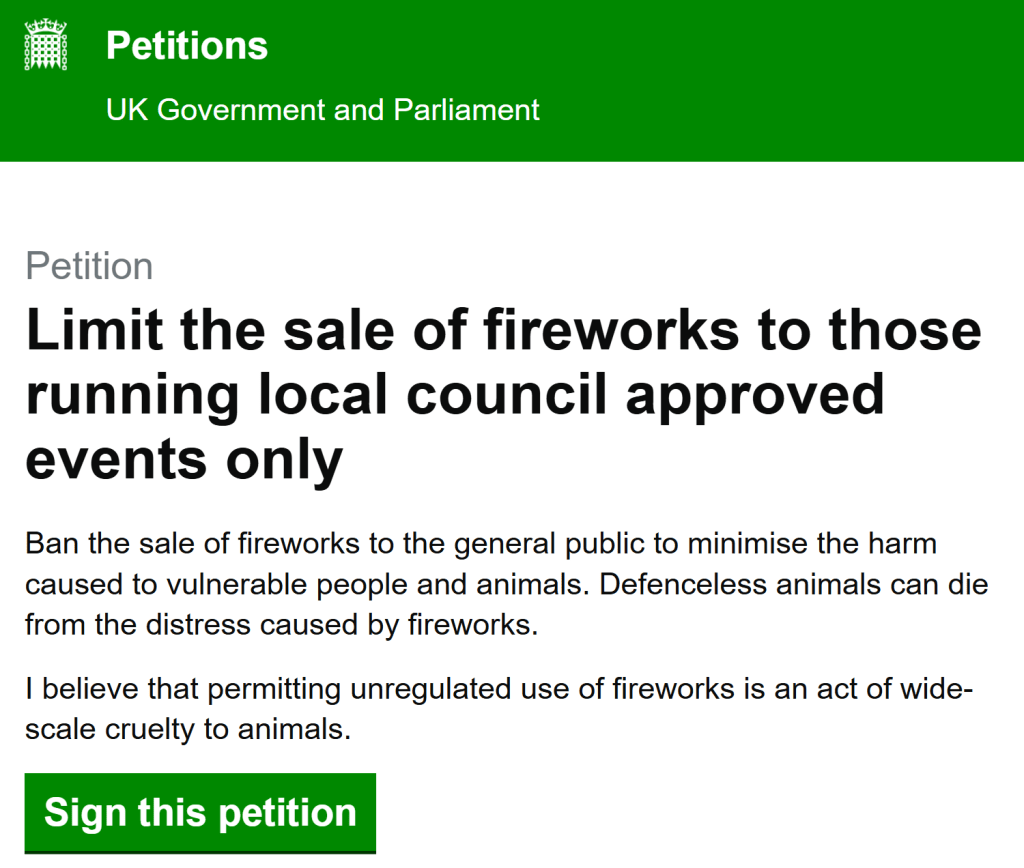
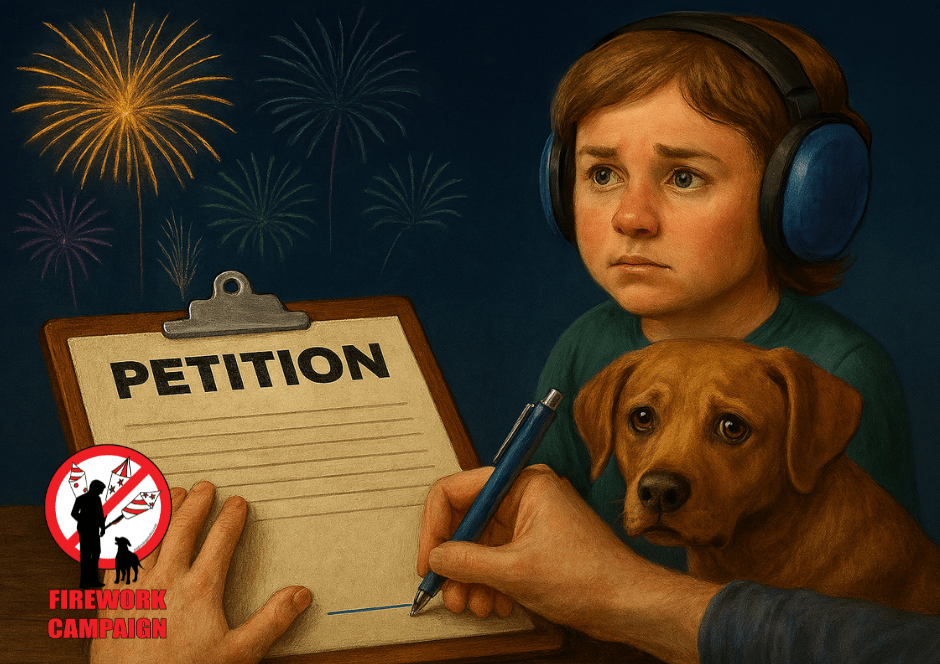
Both petitions are still open to sign if you haven’t already done so:
Redwings Horse Sanctuary have produced this short video, voiced by British actor, filmmaker and conservationist Dan Richardson, to show the impact of loud fireworks on horses:
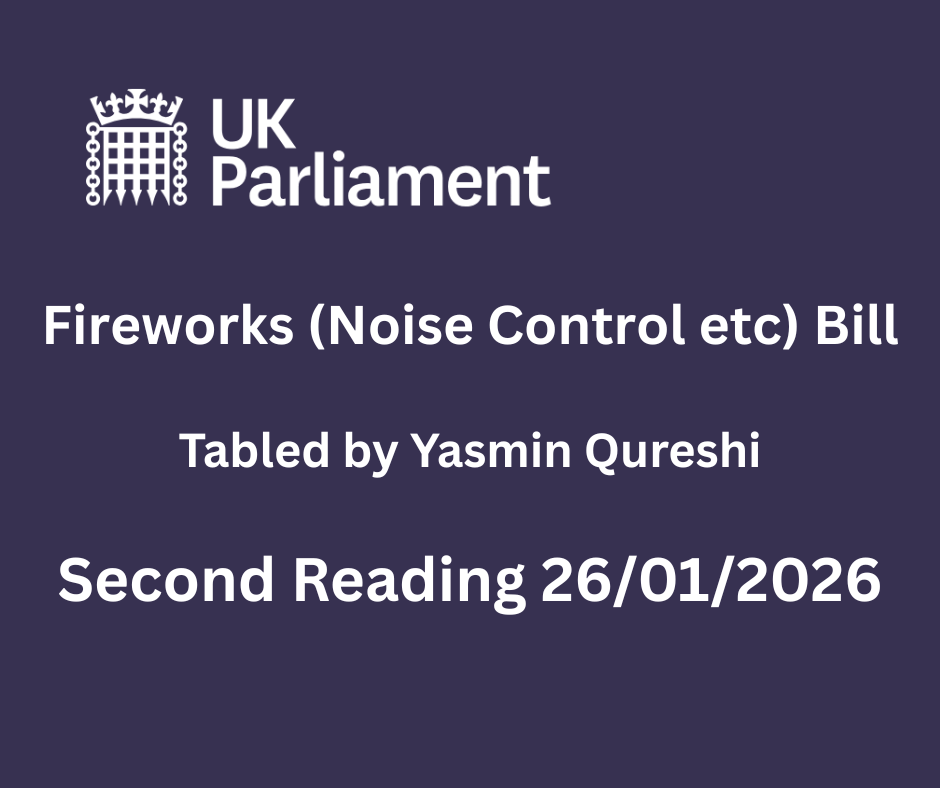
Yasmin Qureshi MP today (03/12/2025) tabled a 10 Minute Rule Bill – Fireworks (Noise Control etc). You can watch here or read the Hansard transcript here
The bill seeks to:
reduce the maximum decibel level to 90-97db on fireworks for public use
require clear db labelling on fireworks
give councils enforcement powers
require the Secretary of State to review the impact of firework noise on veterans, neurodivergent individuals, people with certain medical conditions and animals
The Bill is now scheduled for its second reading on
Monday 26 January 2026
The Bill will be prepared and brought in by:
Jim McMahon
Sarah Champion
Debbie Abrahams
Liz Saville Roberts
Emma Lewell
Jamie Stone
Nadia Whittome
Tan Dhesi
Chris Law
Imran Hussain
Alex Sobel
Yasmin Qureshi
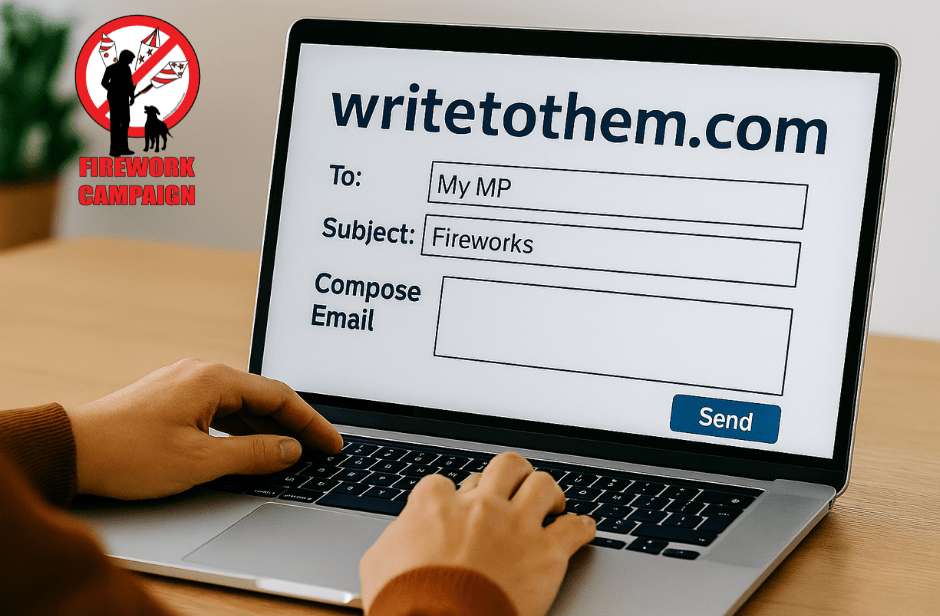
If your MP is on the above list please email to thank them. If they’re not please email to ask them to back the bill: https://www.writetothem.com/
In addition to the MPs who attended the Firework Impact Coalition drop-in event and those who have signed EDM 2138 tabled by Imran Hussain, the MPs listed below have all asked questions of ministers relating to fireworks this year. This proves your emails are working. Please keep writing, even if you get the disappointing standard reply. You can use https://www.writetothem.com/ or send the RSPCA’s standard letter which you can edit to include your personal views: https://www.rspca.org.uk/getinvolved/campaign/fireworks
If you’re struggling with what to write we have lots of tips for you, click here
The government’s responses to both petitions are, regrettably, designed in a way that discourages public support rather than addressing legitimate concerns.
We challenge their assertion that “the majority of individuals who use fireworks do so in a responsible and safe manner.” This claim overlooks the reality that most UK gardens in densely populated areas are far too small to meet the minimum safety distance of 8 metres, let alone the 25 metres required for Category F3 fireworks, which are commonly favoured by enthusiasts.
Reporting illegal use presents significant challenges. Call handlers often lack knowledge of the relevant legislation and frequently redirect complainants to local councils, who in turn refer them back again. Enforcement is notoriously difficult, with prosecutions rare and police forces reluctant to record incidents. As a result, there is no meaningful data available for MPs to consider. Unless MPs witness the misuse of fireworks firsthand, they continue to operate under the mistaken belief that no problem exists.
We urge you to continue sharing both petitions (links below) and to sign them if you haven’t already done so. In addition, please keep writing to your MP, providing details of your own experiences and referencing media reports, so that the scale of the issue cannot be ignored
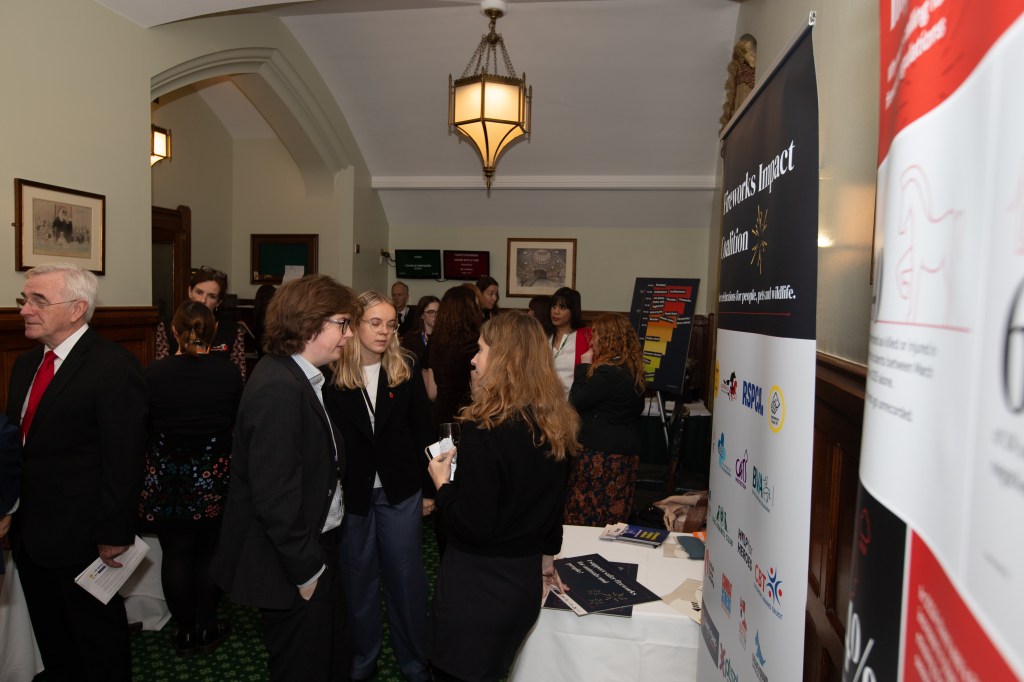
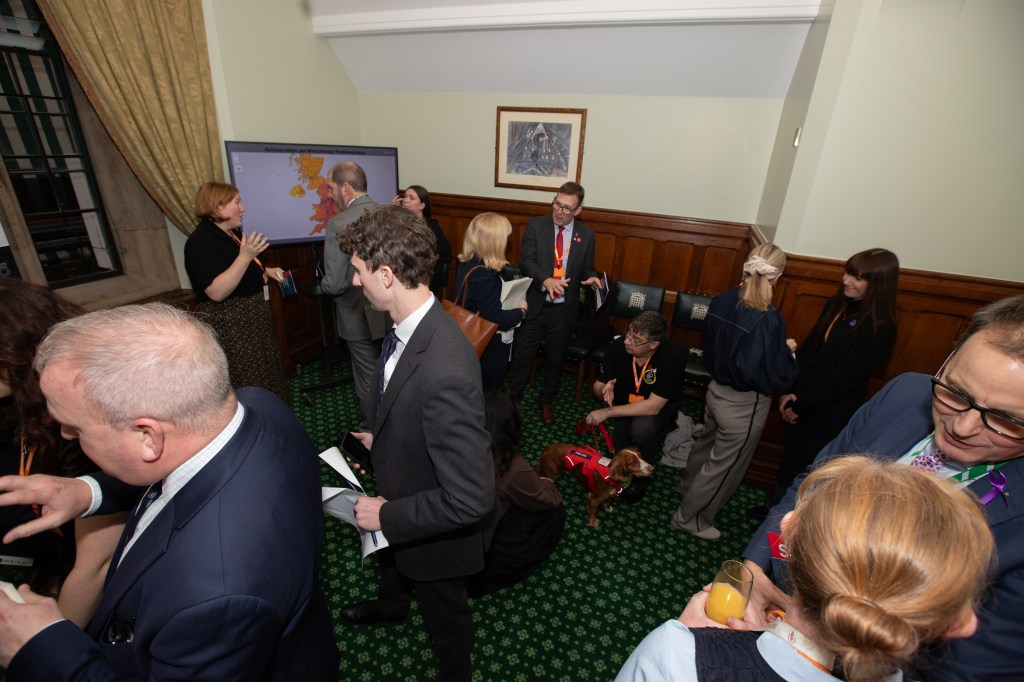
The event held by the Firework Impact Coalition on 12 November 2025 gave MPs the chance to hear from some of the bigger charities how fireworks affect their members. It was a great success with 94 MPs attending (full list below). If your MP is on the list please drop them a line to thank them: https://www.writetothem.com/
Abena Oppong-Asare
Abtisam Mohamed
Adrian Ramsay
Alex Baker
Alex Ballinger
Alex McIntyre
Alison Hume
Amanda Martin
Andrew Cooper
Andrew George
Andrew Griffith
Andrew Pakes
Anna Dixon
Anna McMorrin
Antonia Bance
Baggy Shanker
Cameron Thomas
Cat Eccles
Catherine Fookes
Chris Curtis
Chris Evans
Daniel Francis
Danny Beales
David Burton-Sampson
David Smith
Douglas McAllister
Edward Morello
Emma Lewell
Esther McVey
Freddie van Mierlo
Gagan Mohindra
Gareth Thomas
Sir Gavin Williamson
Graeme Downie
Gurinder Josan
Harpreet Uppal
Helen Maguire
Ian Byrne
Ian Lavery
Ian Sollom
Irene Campbell
James Naish
Jim Dickson
Jim Shannon
Jo Platt
John McDonnell
John Whitby
Jonathan Brash
Jonathan Hinder
Joy Morrissey
Judith Cummins
Juliet Campbell
Justin Madders
Katie White
Lee Dillon
Lisa Smart
Llinos Medi
Lola McEvoy
Lorraine Beavers
Manuela Perteghella
Mark Pritchard
Martin Wrigley
Mary Creagh
Mohammad Yasin
Neil Duncan-Jordan
Dr Neil Hudson
Sir Nicholas Dakin
Nick Timothy
Noah Law
Patricia Ferguson
Paul Davies
Paul Kohler
Peter Swallow
Pete Wishart
Phil Brickell
Rachael Maskell
Rachel Hopkins
Richard Baker
Robin Swann
Rosie Duffield
Ruth Jones
Samantha Niblett
Sarah Owen
Scott Arthur
Sharon Hodgson
Shockat Adam
Steve Yemm
Sureena Brackenridge
Susan Murray
Toby Perkins
Tom Morrison
Tulip Siddiq
Victoria Collins
Vikki Slade
Find out more about the Firework Impact Coalition and how you can support them: https://www.aflr.co.uk/
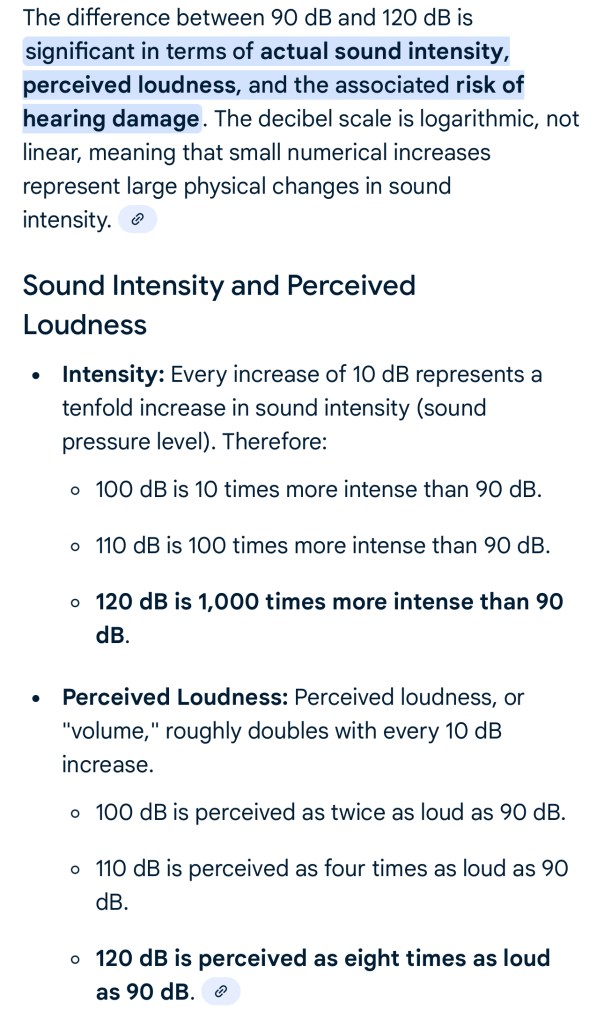
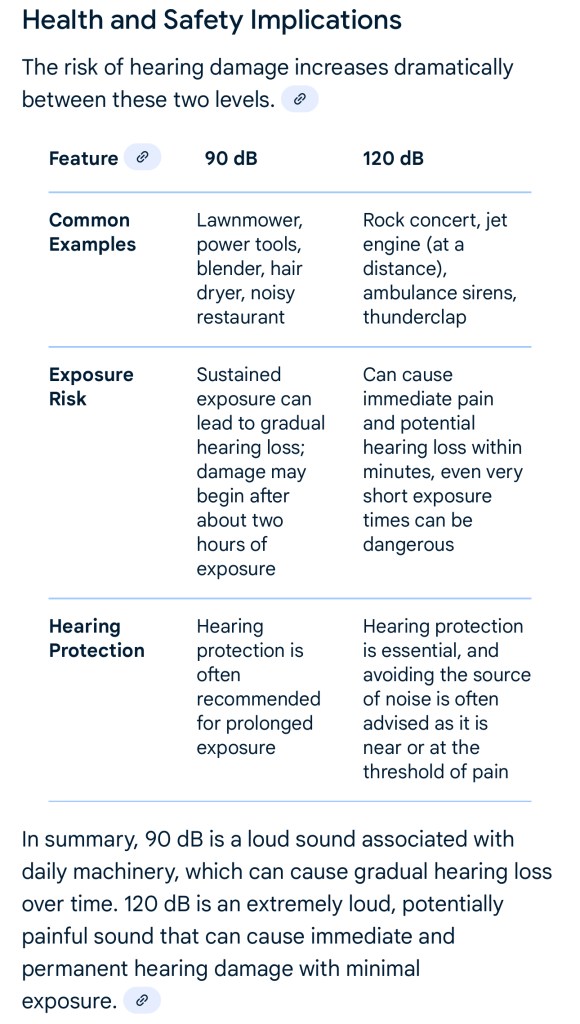
How much difference would reducing the maximum noise level to 90db make?
The difference between 90db and 120db is significant in terms of actual sound intensity, perceived loudness and the associated risk of hearing damage. The decibel scale is logarithmic, not linear, meaning that small numerical increases represent large physical changes in sound intensity.
Intensity: Every increase of 10db represents a tenfold increase in sound intensity. Therefore 120db is 1,000 times more intense than 90db.
Perceived Loudness: (or volume) roughly doubles with every 10db increase. Therefore 120db is perceived as eight times as loud as 90db.
With sincere thanks to Holly Leake of Paw Chores for allowing us to reproduce her content here
I am really tired of the hurtful comments directed at those who have dogs with a fear of fireworks. There are so many accusing dog guardians of neglecting to socialise and train their dog or they are insinuating it is the guardian’s response to the fireworks that makes the dog so afraid. This is despite the fact that dogs (and other animals) across the UK are having heart attacks, seizures and strokes, some of which have been fatal. How can a dog guardian’s response to fireworks possibly elicit such an extreme reaction to fireworks?
And if this is the cause of such extreme fear, what accounts for the deaths of wildlife and farm animals? Are there people ‘coddling’ them too? Let’s not forget dogs in rescue shelters. If it’s our response that creates this fear, then why do rescue dogs show extreme anxiety and try to escape their kennels? They are in there alone most of the time. Such heartless comments are baseless since studies show that there are many factors that contribute to noise sensitivity and a fear of fireworks, as seen below.
Genetics
A study involving over 13,700 dogs in Finland discovered that around 32% of dogs had sound sensitivities and 26% were afraid of fireworks. The scientists in this study also identified a genetic predisposition to a fear of fireworks (Salonen, M. 2020) Blackwell et al. (2013) discovered that twelve breeds or breed types were less likely to show fear responses to noises than cross-breeds and their data suggest that some breeds may be predisposed to fear of loud noises, including fireworks.( Linn Mari Storengen, Frode Lingaas 2015.) Thus, your dog may be afraid of fireworks, due to their genetics.
Pain & health conditions
A study showed that dogs that experienced muscle or bone pain were more sensitive to sudden noises, loud noises and different pitches than dogs who were noise-sensitive but didn’t have pain. (Lopes Fagundes 2018) The same study found that the average age of onset for noise sensitivity in dogs differed between groups. In clinical cases (with pain), the average onset of noise sensitivity was 5 years and 7 months.
“Although the average ages of the dogs at presentation were similar, the average age of onset of the problem was nearly 4 years later in the “clinical cases.” This strong theme of an older age of onset suggests that the pain may develop later in life and that owners seek treatment more readily, perhaps because the appearance of the problem is out of character in the subject. The average age of onset within the control population also suggests that the problem does not simply relate to a lack of habituation as a puppy and that other mechanisms need to be considered for many cases.” (Lopes Fagundes 2018)
Other health conditions can also trigger noise phobias. Conditions such as endocrine diseases, cardiopulmonary disease, neurological problems, and cognitive dysfunction, can potentially contribute to or exacerbate behavioural problems including noise fears. (Bowen J. 2008) So both pain and health conditions can cause a fear of fireworks.
Age
Studies show that fearfulness is most common in dogs aged 4-8 years and that noise sensitivity often increases with age., ( Milla Salonen 2020) Another study that supports this shows that the average age of onset of noise phobias developed around 4 years 7 months of age. Dogs progressing through adolescence also go through a second fear period from around 10-12 months of age. At this time of development, dogs can develop new fears and phobias, including noises like fireworks. As a dog reaches their senior years, ill health and conditions such as cognitive dysfunction disorder (dog dementia) can also cause anxiety, fear-related behaviours and noise sensitivities.
Anxiety
Studies show that dogs most fearful of noises also presented with a higher chance of separation-related anxiety and being fearful in novel situations. These dogs also took much longer to decompress after a stressful event compared to dogs less fearful of noises. (Linn Mari Storengen, Frode Lingaas 2015.) It makes sense that if your dog is already struggling with anxiety, that they are more likely to develop noise phobias.
Survival Instinct
“An extreme avoidance response to a loud firework going off unexpectedly nearby, given the salience of this event and its unpredictability for the animal, can be interpreted as adaptive (‘rational’), an argument which has also been applied to extreme fear responses in humans”. (Davey, 1995) From a survival point of view, it is logical for dogs and other animals to respond in fear to explosions. Why wouldn’t they? They can’t reason that it’s harmless.
It should be noted that studies have found that dogs that attend training classes are less likely to be afraid of fireworks however, it is unknown why this would be the case, as exposure to fireworks sounds is not usually part of the curriculum.
Many dogs have been desensitized to fireworks as puppies and have been adequately trained and socialized, and yet they still develop a fear of fireworks. The fact that dogs don’t develop this fear until around the age of 4 proves that often the fear is due to over-exposure, trauma, anxiety or health issues. If it was solely due to a lack of training or due to the dog guardians’ response to the fear, we would likely see the phobia developing much earlier in the dog’s life.
Therefore, it is hurtful and completely speculative to blame guardians for a dog’s phobia of fireworks. The real blame rests on the shoulders of those who continue to set off loud fireworks, knowing for well the suffering it causes to dogs, pets, wildlife, and even people. – Holly Leake
Huge thanks to my friends at Canine Principles for their help finding studies on the subject.
References
Bowen J. Firework Fears and Phobias. UK Vet Companion Anim. 2008;13:59–63. doi: 10.1111/j.2344-3862.2008.tb00529.x. [DOI] [Google Scholar]
Camps T., Amat M., Manteca X. A Review of Medical Conditions and Behavioral Problems in Dogs and Cats. Animals. 2019;9:1133. doi: 10.3390/ani9121133. [DOI] [PMC free article] [PubMed] [Google Scholar
Lopes Fagundes AL, Hewison L, McPeake KJ, Zulch H, Mills DS. Noise Sensitivities in Dogs: An Exploration of Signs in Dogs with and without Musculoskeletal Pain Using Qualitative Content Analysis. Front Vet Sci. 2018 Feb 13;5:17. doi: 10.3389/fvets.2018.00017. PMID: 29487858; PMCID: PMC5816950.
Linn Mari Storengen, Frode Lingaas 2015. Noise sensitivity in 17 dog breeds: Prevalence, breed risk and correlation with fear in other situations Applied Animal Behaviour Science
Salonen, M., Sulkama, S., Mikkola, S. et al. Prevalence, comorbidity, and breed differences in canine anxiety in 13,700 Finnish pet dogs. Sci Rep 10, 2962 (2020). https://doi.org/10.1038/s41598-020-59837-z








 The Firework Campaign UK